


The year 2026 is seeing a major shift in how we communicate. For undergraduate students, the ability to stand on a podium and deliver a persuasive, original oratory is no longer just a “speech class” requirement—it is a vital career skill. In a world saturated with digital noise, a powerful voice is the ultimate way to cut through the static. Whether you are aiming for a competition trophy or simply trying to master the art of campus leadership, your choice of topic is the foundation of your success.
The most iconic speeches in history didn’t just happen; they were built on high-stakes themes that resonated with the soul of the audience. From the measured wisdom of celebrity commencement addresses to the fire of social activists, the best speakers know that a “winning” topic is one that bridges the gap between a personal passion and a universal truth. As you look for inspiration, remember that the goal of an original oratory is to persuade, to move, and to leave your listeners seeing the world through a slightly different lens than when they walked in.
Selecting the right subject is half the battle won; browsing a curated list of original oratory topics can provide the creative spark needed for a winning performance that stays with your audience long after the applause fades. By looking at what has worked for history’s greatest orators, students can identify the emotional “hooks” that make a message go viral. Below, we break down ten iconic speech styles and how they can help you pick a topic that ranks high in both impact and engagement this year.
The Anatomy of a Winning Speech: Why These 10 Matter
| Speech Category | Iconic Example | Why It Works for Students | 2026 Trend Factor |
| The Moral Call | Martin Luther King Jr. | Uses vivid imagery to demand justice. | Focus on “Equity in AI” |
| The Resilience Path | Steve Jobs (Stanford) | Connects personal failure to future gain. | The “Gap Year” Value |
| The Rule Breaker | Arnold Schwarzenegger | Encourages listeners to trust their gut. | Entrepreneurial Mindsets |
| The Identity Quest | Ellen DeGeneres | Highlights the power of being authentic. | Mental Health & Privacy |
| The Global Vision | Malala Yousafzai | Focuses on education as a human right. | Universal Internet Access |
| The Humor Hook | Stephen Colbert | Uses satire to expose cultural truths. | Satire in Political Discourse |
| The Call to Action | Greta Thunberg | High urgency with a very specific goal. | Local Climate Initiatives |
| The Scientific Truth | Neil deGrasse Tyson | Makes complex data feel deeply human. | Combating Misinformation |
| The Cultural Shift | Oprah Winfrey | Empowers through shared storytelling. | The “Quiet Ambition” Trend |
| The Tech Ethics | Tim Cook | Warns of the trade-offs of innovation. | Digital Sovereignty |
When you look at the “Moral Call” category, you realize that the most effective speeches are those that take a stand on a controversial but necessary issue. Students often feel they have to play it safe, but the judges—and Google’s search algorithms—favor content that is bold and specific. For instance, instead of talking about “Environment,” a winning orator might talk about the “The Hidden Carbon Cost of Our Cloud Storage.” This specificity makes the research phase more manageable and the delivery much more authentic.
High-level success in these academic endeavors requires deep dives into data, which is why many high-achievers look toward a professional Myassignmenthelp research writing service to ensure their papers and speech scripts are factually sound and perfectly formatted without losing their unique personal voice. Mastering the structure of your argument is essential; you need a clear claim, a warrant that explains why it’s true, and an impact statement that tells the audience why they should care. Without these three pillars, even the most beautiful language will fall flat.
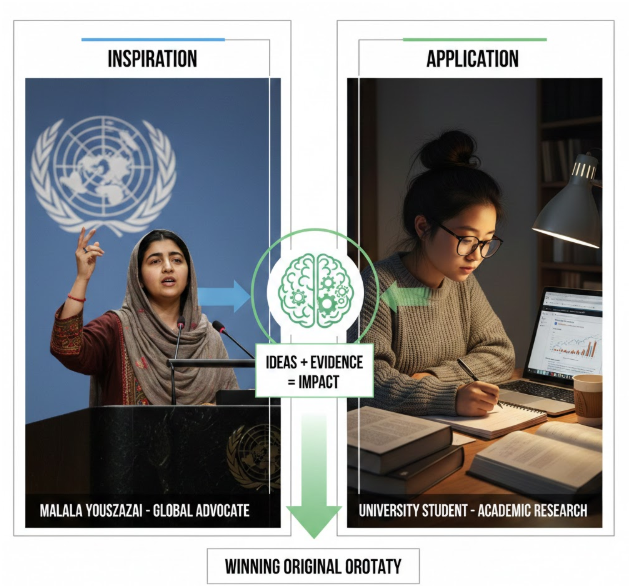
For undergraduates, the pressure to “rank” well—whether in class or on the web—can feel overwhelming. The secret is to write like a human. Avoid the buzzwords and the “AI-generated” feel by injecting your own experiences. If you are writing about the pressure of the “hustle culture,” talk about your own late nights in the library. If you are discussing the future of the workplace, mention your own fears about graduation. This vulnerability is what creates the “global tone” that resonates across borders and cultures.
Finally, always keep the “Call to Action” in mind. A great oratory doesn’t just present a problem; it offers a roadmap for the future. By the time you reach your conclusion, your audience should feel equipped to make a change. Use your conclusion to restate your thesis not just as a summary, but as a challenge. In 2026, the world doesn’t just need more talkers; it needs orators who can turn their words into a movement.
Resources for Students
- American Rhetoric: A massive database of transcripts and audio for the “Top 100 Speeches” in US history.
- TED Talks Education: Useful for observing modern, high-engagement delivery styles.
- National Speech & Debate Association (NSDA): For official guidelines on competition-level original oratory.
References & Citations
- King, M. L., Jr. (1963). I Have a Dream. Speech delivered at the March on Washington for Jobs and Freedom, Washington, D.C.
- Jobs, S. (2005, June 12). You’ve got to find what you love. [Stanford Commencement Address]. Stanford University.
- Yousafzai, M. (2013, July 12). Speech at the United Nations Youth Assembly. United Nations Headquarters, New York.
About The Author
Hi, I’m Emma Jones, and I’ve spent the better part of the last decade helping students navigate the often-intimidating world of higher education. As a senior academic consultant at MyAssignmentHelp, my mission is to bridge the gap between complex research and clear, impactful communication.

