


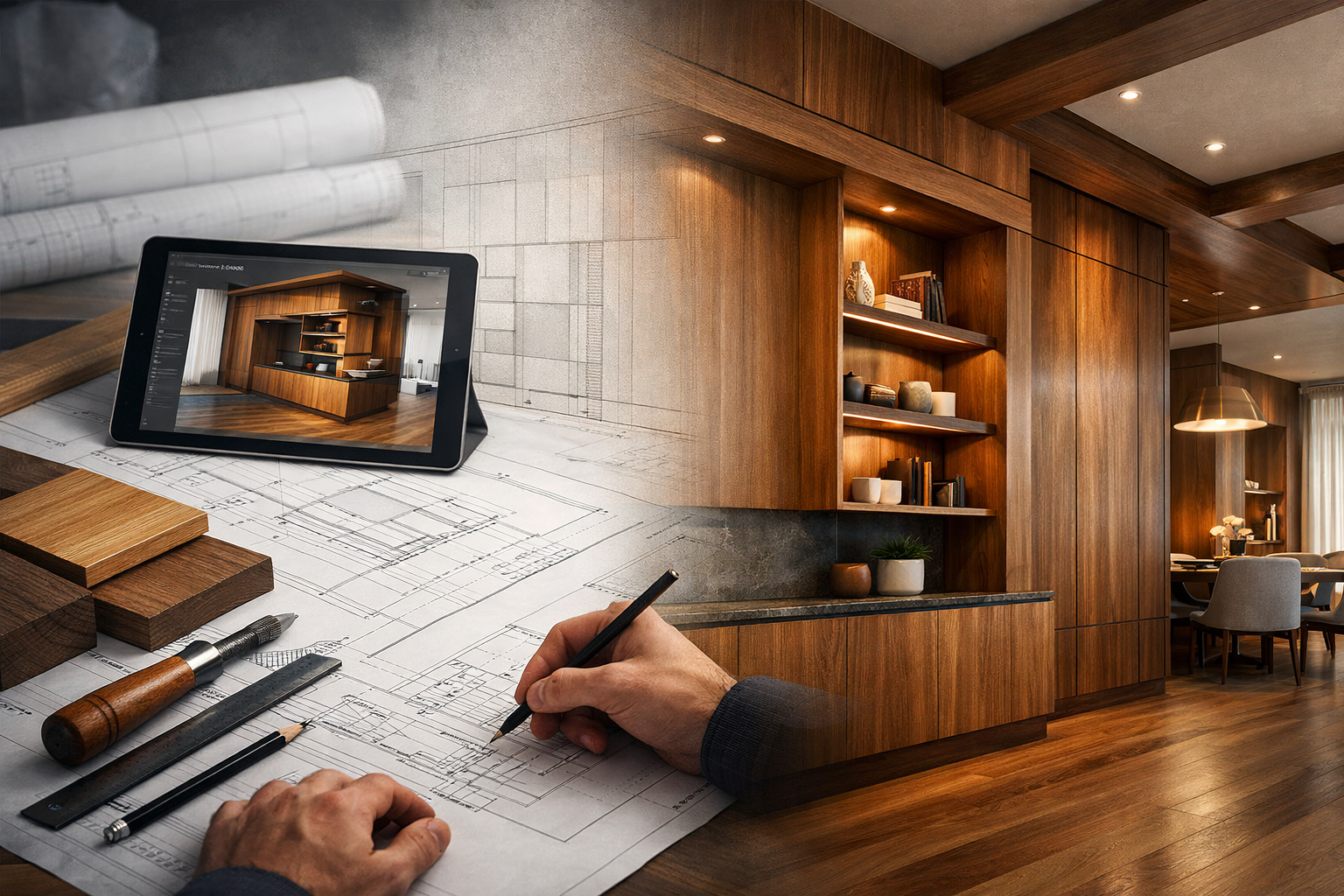
Interior wood features have long played a defining role in architectural design, but their relevance in contemporary commercial and residential projects continues to grow. From statement reception desks and wall paneling to custom cabinetry and integrated ceiling systems, wood elements provide warmth, sophistication, and material depth that few other finishes can match.
For architects, interior designers, and builders, the success of these features depends on more than aesthetic appeal. High-quality interior wood components require careful coordination across multiple phases of a project—from early design concepts to engineering, fabrication, and installation. Each step introduces technical considerations that influence durability, constructability, and visual impact.
Understanding the full lifecycle behind interior wood features helps project teams make better design decisions, reduce costly revisions, and deliver spaces that perform as intended for decades.
Concept Development: Translating Vision into Architectural Wood Features
The Role of Architects and Interior Designers in Early Ideation
The process begins during the conceptual design phase, when architects and interior designers explore how wood elements will contribute to the overall spatial narrative of a project. Interior wood features are often used to define focal areas, create visual continuity, or introduce natural materials into otherwise modern or industrial environments.
Common conceptual applications include:
Custom reception desks and lobby walls in commercial buildings
Wood ceiling systems in hospitality and retail environments
Integrated shelving or display elements in mixed-use spaces
Decorative wall paneling in corporate offices or healthcare settings
At this stage, the emphasis is primarily on design intent. Architects consider proportions, material tone, texture, and how wood elements interact with lighting and surrounding materials such as stone, glass, or metal.
Early sketches, renderings, and digital models help visualize how these elements support the project’s broader architectural vision.
Aligning Aesthetic Intent with Functional Requirements
While concept development is largely design-driven, successful projects also consider practical constraints early in the process. Interior wood features must accommodate factors such as structural support, mechanical integration, fire safety requirements, and long-term durability.
For example, a wood slat ceiling may need to integrate lighting fixtures, HVAC diffusers, or acoustic backing. Similarly, large wall panels may require concealed mounting systems that allow for expansion and contraction caused by humidity changes.
Addressing these considerations during the concept phase prevents significant redesigns later in the project.
Design and Planning: Converting Concepts into Buildable Solutions
Integrating Architectural Millwork into the Design Documentation
Once the design direction is established, the project moves into detailed planning. Architects and designers begin refining dimensions, material specifications, and construction methods that will translate the concept into buildable components.
This stage often involves working closely with specialists in architectural millwork and design, who help interpret design intent into technical documentation. Millwork experts provide insight into joinery methods, panel construction, substrate materials, and hardware requirements that may not be immediately visible in architectural drawings.
Detailed documentation typically includes:
Millwork plans and elevations
Material schedules and finish specifications
Connection details and support requirements
Integration points with adjacent building systems
These documents ensure that fabricators and installers clearly understand how each component should be produced and assembled.
Collaboration Between Designers, Millwork Specialists, and Project Teams
High-quality interior wood features are rarely the result of a single discipline working in isolation. Instead, they require ongoing collaboration between architects, interior designers, general contractors, millwork fabricators, and project managers.
Design coordination meetings allow stakeholders to address questions such as:
How will large panels be transported and installed?
Are wall substrates capable of supporting heavy wood assemblies?
What tolerances are acceptable for visible joints and seams?
How will the millwork interface with lighting and mechanical systems?
By resolving these issues early, teams reduce the risk of delays or conflicts during construction.
Material Selection: Balancing Performance, Aesthetics, and Sustainability
Solid Hardwoods, Veneers, and Engineered Wood Options
Material selection is one of the most critical decisions in the creation of interior wood features. Different wood products offer varying levels of durability, cost efficiency, and visual consistency.
Solid hardwoods are often used for high-impact elements such as countertops, stair components, or exposed trim. Species like oak, maple, walnut, and ash provide natural grain patterns and long-term durability.
Wood veneers are widely used for large panels and casework because they provide the visual appearance of solid wood while reducing material costs and minimizing movement caused by environmental changes. Veneers can be applied to substrates such as MDF or plywood to create stable and uniform panels.
Engineered wood products, including laminated panels and composite boards, are often used when structural stability or moisture resistance is required. These materials allow fabricators to achieve precise dimensions while maintaining consistent performance across large surfaces.
Selecting the appropriate material depends on factors such as exposure conditions, maintenance expectations, and the desired aesthetic.
Environmental Considerations and Responsible Sourcing
Sustainability is increasingly influencing material decisions in modern architectural projects. Many architects and developers prioritize responsibly sourced wood products that support environmental certification standards and reduce ecological impact.
Common sustainability considerations include:
Use of FSC-certified wood products
Low-emission adhesives and finishes
Efficient material utilization through veneer technology
Durable finishes that extend product lifespan
By incorporating environmentally responsible materials, projects can contribute to broader sustainability goals while maintaining high design standards.
Engineering and Fabrication: Precision Behind the Craft
Digital Modeling, Shop Drawings, and CNC Technology
Once materials and specifications are finalized, the fabrication phase begins with detailed shop drawings and digital modeling. These drawings translate architectural plans into precise production instructions for millwork manufacturers.
Shop drawings include exact dimensions, joinery methods, hardware placements, and finishing details. They are typically reviewed and approved by the design team before fabrication begins.
Modern fabrication facilities rely heavily on computer-controlled machinery such as CNC routers and automated cutting systems. These technologies allow manufacturers to produce highly accurate components while maintaining consistent quality across multiple units.
Digital fabrication also improves efficiency by reducing waste and ensuring components fit together precisely during installation.
Skilled Craftsmanship and Fabrication Techniques
While advanced machinery plays a significant role in production, craftsmanship remains central to high-quality interior wood features. Skilled technicians handle critical processes such as veneer matching, edge detailing, sanding, and finishing.
For example, book-matched veneer panels require careful alignment of grain patterns to create symmetrical visual effects across large surfaces. Similarly, custom moldings and curved components often require specialized fabrication techniques.
Combining modern technology with experienced craftsmanship ensures that fabricated pieces meet both technical and aesthetic standards.
Quality Control: Ensuring Consistency and Performance
Production Oversight and Finishing Standards
Quality control is an essential component of the fabrication process. Manufacturers implement multiple inspection stages to ensure that components meet design specifications and finish requirements.
Surface preparation and finishing are particularly critical for interior wood elements. High-quality finishes protect wood surfaces from wear, moisture, and UV exposure while enhancing natural grain patterns.
Common finishing methods include:
Staining and sealing
Catalyzed lacquer coatings
Water-based finishes
Protective polyurethane systems
Each finish type is selected based on the intended use of the product and the desired visual appearance.
Mock-Ups, Prototypes, and Client Approvals
In many commercial projects, teams produce full-scale mock-ups or sample panels before final production begins. These prototypes allow architects, designers, and clients to evaluate materials, finishes, and construction details in a real-world context.
Mock-ups help confirm design intent while providing an opportunity to address potential issues before large-scale fabrication proceeds.
Installation: Coordinating the Final Stage of the Process
Site Preparation and Logistics
Even the highest-quality fabrication can fail if installation is not properly coordinated. Interior wood features often require precise site conditions to ensure accurate alignment and structural stability.
Before installation begins, project teams verify that wall framing, substrates, and mechanical systems are properly positioned. Environmental conditions such as humidity and temperature must also be controlled to prevent wood movement.
Logistics planning is especially important for large or complex assemblies. Panels may need to be delivered in a specific sequence to accommodate installation schedules and site access limitations.
Installation Precision and Integration with Other Trades
During installation, millwork installers work closely with other trades to ensure seamless integration with surrounding building systems. This may involve coordinating with electricians, drywall contractors, flooring installers, and ceiling specialists.
Precision is essential, particularly for visible joints and continuous grain patterns across multiple panels. Skilled installers use specialized tools and alignment techniques to achieve tight seams and consistent spacing.
Proper installation ensures that the finished product matches the design vision while maintaining long-term durability.
Long-Term Value: Performance Beyond Installation
Durability and Lifecycle Benefits
High-quality interior wood features offer long-term performance benefits when designed and installed correctly. Durable finishes, stable substrates, and proper mounting systems help prevent issues such as warping, cracking, or surface damage.
Compared to many synthetic materials, wood also offers repairability. Scratches or minor damage can often be refinished rather than requiring full replacement.
This longevity makes wood features a cost-effective investment over the lifecycle of a building.
Enhancing Property Value and Architectural Identity
Beyond durability, interior wood elements significantly contribute to the perceived quality of a space. Well-crafted wood features create visual richness, improve occupant experience, and reinforce a building’s architectural identity.
In commercial environments such as offices, hospitality venues, and retail spaces, these elements often serve as defining design features that elevate the overall environment.
Developers and property owners increasingly recognize that thoughtfully executed millwork can strengthen brand identity, attract tenants, and increase long-term property value.
Conclusion
The creation of high-quality interior wood features is the result of a structured and collaborative process that spans concept development, detailed design, material selection, precision fabrication, and careful installation.
For architects, interior designers, and construction professionals, understanding this process is essential for delivering successful projects. Each phase introduces technical decisions that influence both the visual outcome and the long-term performance of wood elements within a building.
When design vision is supported by expert engineering, skilled craftsmanship, and coordinated project management, interior wood features become more than decorative details. They become integral architectural components that enhance aesthetics, durability, and the overall value of the built environment.
Meta Title:
How Premium Interior Wood Features Move From Design to Build
Meta Description:
A behind-the-scenes look at how architects and millwork experts transform design concepts into high-quality interior wood installations.

