


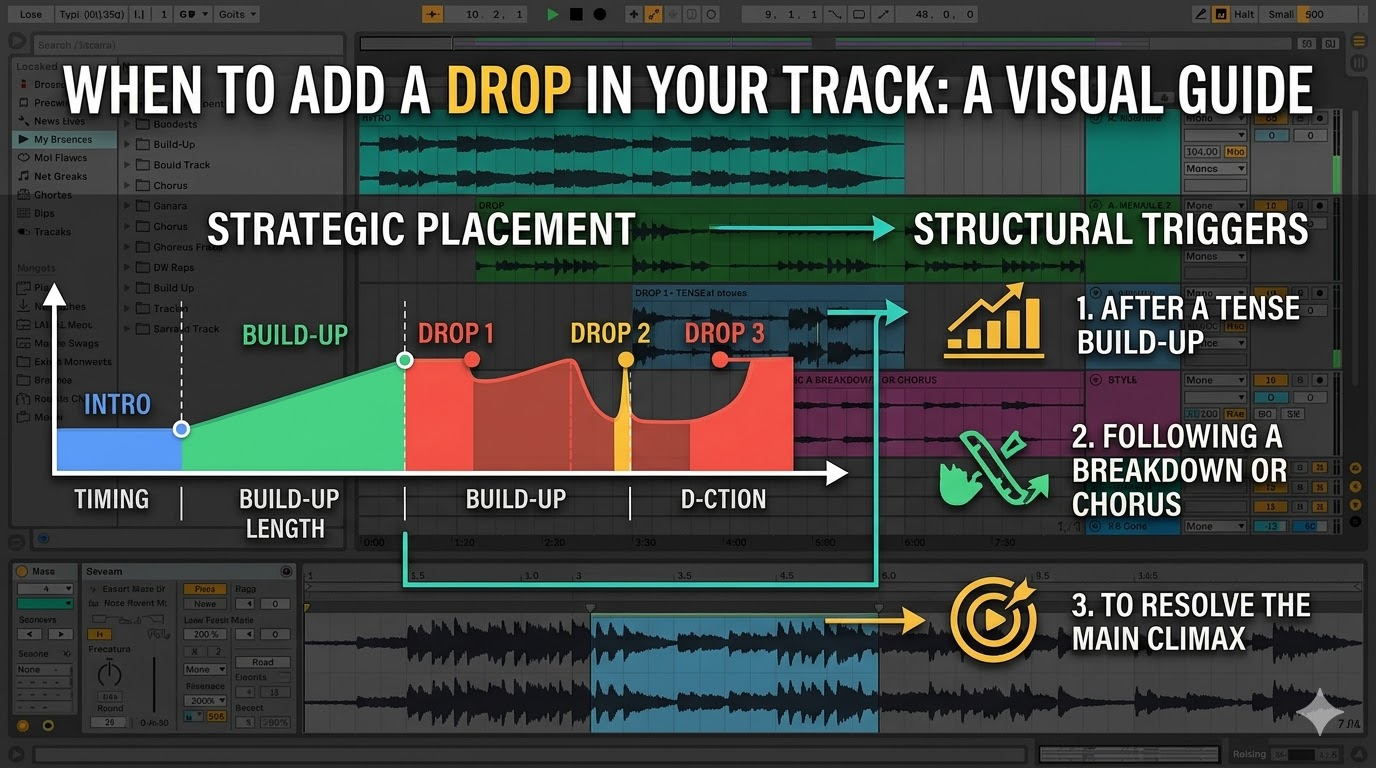
Understanding when should you add a drop in a track is essential for music producers who want to create songs that energise and captivate listeners. A drop is the moment in a track where tension built during the intro or breakdown is released, often combining bass, rhythm, and melody into a climactic section. Proper placement of a drop can transform a track from ordinary to extraordinary, ensuring it resonates with audiences and leaves a lasting impact.
The decision of when should you add a drop in a track is not arbitrary. It involves carefully considering the song’s structure, energy flow, and the emotional journey of the listener. A well-timed drop maintains engagement, encourages movement on the dance floor, and can become the most memorable part of the track. Learning how to position drops effectively is a fundamental skill for any producer looking to improve the dynamics of their music.
Understanding the Drop in Music
A drop is one of the most exciting elements in modern music, particularly in genres like EDM, house, dubstep, and trap. It is the section where the music transitions from a build-up or breakdown into a powerful climax, often featuring intensified bass, synthesizers, or layered melodies. Understanding when should you add a drop in a track is key because it allows producers to structure songs that feel natural, impactful, and emotionally satisfying.
Drops vary in style depending on the genre. In EDM, a drop might combine layered synths with a punchy bassline, while in trap or bass-heavy music, it could emphasise rhythmic percussion and low-end frequencies. By studying tracks across different genres, producers can grasp how energy levels, tension, and musical phrasing influence the timing of a drop and learn exactly when should you add a drop in a track to maintain listener engagement.
Timing and Structure of a Drop
Determining when should you add a drop in a track starts with understanding musical bars and phrasing. Typically, the first drop appears after 16–32 bars of build-up, allowing tension to accumulate naturally. A second drop may follow 8–16 bars later, often adding new melodic or rhythmic layers to keep the track dynamic. Correctly timed drops maintain the listener’s interest and make the track feel professionally structured and polished.
Energy and phrasing are crucial factors in deciding when should you add a drop in a track. Drops are most effective following quiet or minimal sections, melodic build-ups, or rhythmic tension. Placing the drop at the beginning of a new musical phrase ensures it feels seamless and impactful. Poorly timed drops can feel jarring or underwhelming, so producers must carefully consider bar counts, dynamics, and listener anticipation when planning their tracks.
Building Up to the Perfect Drop
A successful drop depends heavily on the build-up leading to it. Techniques like risers, white noise sweeps, snare rolls, and filter sweeps gradually increase tension and prepare listeners for the release. Knowing when should you add a drop in a track involves understanding how to structure these build-ups so that the climax feels earned, exciting, and satisfying for the audience.
Contrast is another important consideration. Reducing bass, simplifying arrangements, or creating a moment of silence just before the drop can heighten its impact. This approach creates a sense of anticipation that makes the drop feel dramatic and powerful. Producers who master the art of tension and release gain a significant advantage in determining when should you add a drop in a track that maximises energy and emotional engagement.
Pro Tips for Maximum Drop Impact
Professional producers use several techniques to enhance the effectiveness of a drop. Arranging the drop before the build-up, carefully controlling dynamics, and choosing impactful frequencies are all strategies that help a track hit harder. Understanding when should you add a drop in a track also involves avoiding overcomplication; sometimes, less is more when it comes to creating a punchy, memorable drop.
Genre-specific adjustments can further refine a drop. For instance, EDM and house often benefit from longer build-ups and sustained tension, while bass-heavy genres like dubstep require precise timing for the impact to hit just right. Learning when should you add a drop in a track through experimentation and analysis of successful tracks enables producers to tailor their approach to their musical style and audience expectations.
Genre Considerations and Techniques
Different genres have unique approaches to drops, which affects the timing and techniques used. Pop music may favour simple, catchy drops that maintain mainstream appeal, whereas EDM, trap, or dubstep often emphasise dramatic tension and rhythmic complexity. Knowing when should you add a drop in a track within each genre is crucial for creating music that feels authentic and engages listeners effectively.
Using digital audio workstations (DAWs) and plugins is another way to perfect a drop. Automation, effects, and frequency manipulation can enhance the intensity of a drop, ensuring it hits just right. Analysing successful tracks and observing where producers place their drops gives valuable insight into when should you add a drop in a track, helping aspiring producers create professional-level arrangements.
Case Studies and Real-World Examples
Examining popular tracks provides practical lessons for understanding when should you add a drop in a track. Many UK EDM tracks place the first drop around 45–60 seconds, allowing enough time for melodic development and anticipation. The second drop often introduces variations to maintain energy, demonstrating how timing, bar count, and musical phrasing influence listener engagement.
Studying tracks across multiple genres shows that drops are effective when timed to create tension and release. By analysing hits, producers can learn which techniques enhance impact, including layering, contrast, and automation. Real-world examples make it easier to understand when should you add a drop in a track, giving actionable guidance for arranging and structuring your own music.
Conclusion
Knowing when should you add a drop in a track is essential for producing music that connects with listeners and creates memorable moments. Timing, bar counts, energy, and build-ups all play a role in determining the perfect drop placement. By experimenting with techniques, analysing successful tracks, and applying genre-specific strategies, producers can elevate their music and ensure their drops hit with maximum impact.

