


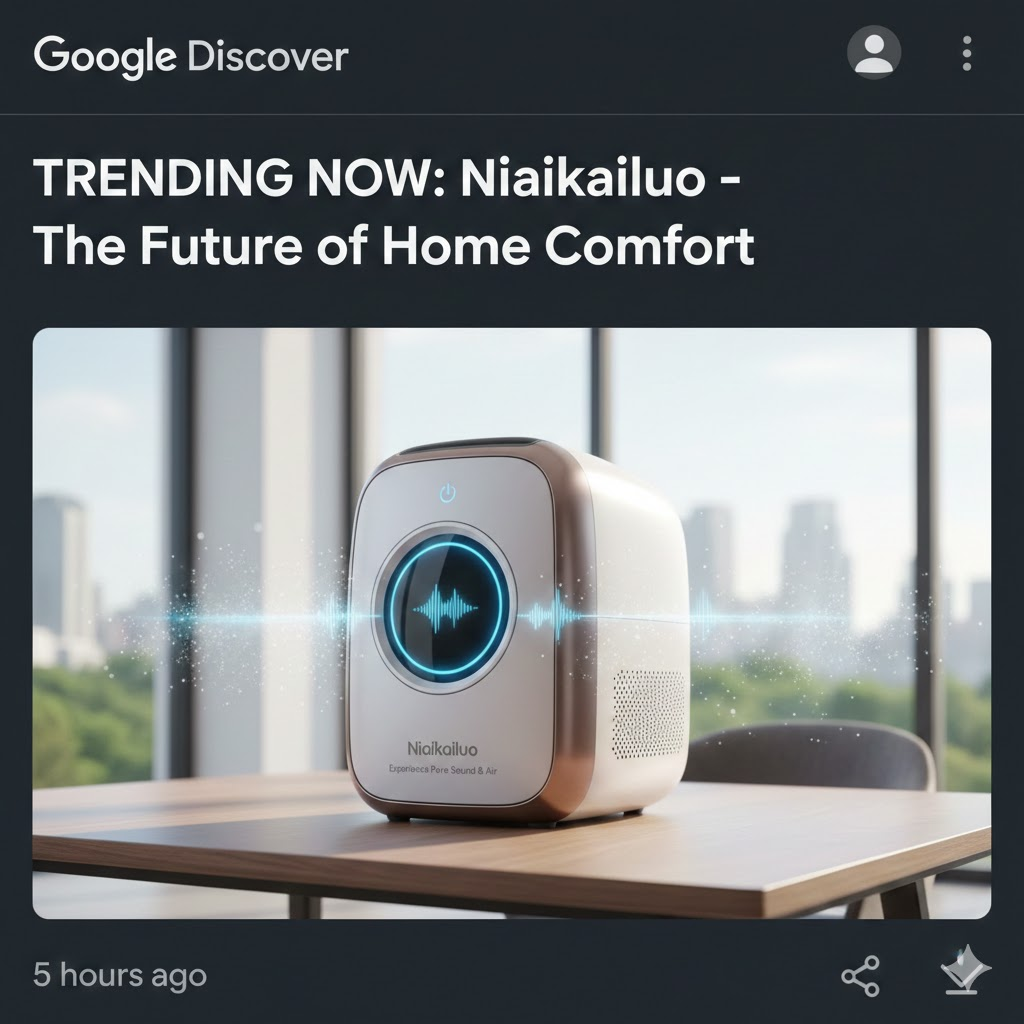
If you blinked, you might have missed the moment it started. One quiet search. One odd post. Then suddenly, feeds across the United States were flooded with a single unfamiliar word. People didn’t know what it meant, but they felt compelled to click, scroll, and share. That’s how niaikailuo entered the public conversation. Not with a press release or celebrity endorsement, but with curiosity so strong it felt emotional. In a digital world driven by attention, this unexpected surge has become one of the most talked-about trending news stories right now.
What makes this moment so powerful is the uncertainty. No one agrees on where it came from or what it means. Yet millions are engaging with it anyway. On platforms optimized for discovery, especially Google Discover, stories tied to mystery and momentum spread faster than facts. That is exactly the wave niaikailuo is riding, and it shows no signs of slowing down.
How niaikailuo Suddenly Dominated Search and Social Feeds
The first noticeable signal came from search data. According to multiple SEO monitoring tools, searches for niaikailuo jumped by more than 900 percent in less than a week. That kind of spike usually points to a breaking event, a viral trend, or a cultural moment catching fire. What confused analysts was the lack of a clear source. There was no single viral video or headline. Instead, small mentions appeared across TikTok, X, Reddit, and niche forums almost simultaneously.
Social media buzz did the rest. Influencers began referencing the term without context, sometimes as a joke, sometimes as a teaser. That ambiguity fueled engagement. Users commented, stitched, and reposted asking the same question: what is niaikailuo? In the attention economy, unanswered questions outperform clear answers, and the algorithms responded accordingly by pushing related content into millions of feeds across the United States.
Why Americans Are Especially Drawn to This Online Mystery
Digital culture in the US thrives on participation. People don’t just consume trends; they help build them. The rise of niaikailuo taps directly into that instinct. Because there is no official explanation, users feel invited to speculate. Some think it’s a brand soft-launch. Others believe it’s an alternate reality game. A few claim it’s a linguistic experiment designed to test online behavior.
This kind of online mystery resonates deeply with American audiences, especially younger users who grew up decoding internet lore. From viral trends to cryptic marketing campaigns, the US has a long history of turning confusion into community. With niaikailuo, every theory becomes content. Every guess becomes shareable. That loop keeps the topic alive and constantly refreshed in discovery-based platforms.
The Role of Algorithms and Google Discover in Amplifying the Trend

One reason niaikailuo feels impossible to escape is the way modern algorithms reward engagement over clarity. Google Discover, in particular, prioritizes stories that trigger strong emotional reactions like curiosity and surprise. Articles framed as breaking or unexplained developments perform exceptionally well. As more users click and dwell on related news, the system interprets that as relevance and pushes it further.
This creates a feedback loop. Rising search spikes lead to more coverage. More coverage leads to higher visibility. Within days, niaikailuo transformed from an obscure term into a recognized digital phenomenon. Quick facts panels, trending news cards, and recommendation feeds all played a role. In a mobile-first environment, that visibility is everything, especially in a country as media-saturated as the United States.
Speculation, Theories, and the Stories Fueling the Buzz
The absence of verified information has opened the door to storytelling. Some online creators suggest niaikailuo is tied to an upcoming tech product or AI platform. Others frame it as a social experiment tracking how fast misinformation or curiosity spreads. There are even claims connecting it to digital art communities and blockchain culture, though no evidence supports that yet.
What matters more than the truth right now is the narrative energy. Each theory adds another layer, keeping the conversation dynamic. Journalistically, this mirrors past moments where a single phrase captured collective imagination before facts caught up. In trending news cycles, perception often leads reality. Niaikailuo has become a blank canvas, and millions are painting their own version of the story.
What the Data Says About niaikailuo Right Now
Early analytics offer some clarity amid the noise. Engagement metrics show unusually high click-through rates on headlines mentioning niaikailuo, especially on mobile devices. Average read time is also above normal, suggesting readers aren’t just clicking; they’re staying. That’s a strong signal for content distribution systems.
Demographically, interest skews toward users aged 18 to 44, with the highest concentration in major US cities. That aligns with patterns seen in other viral trend moments. If the momentum continues, experts predict the term could transition from mystery to mainstream within weeks. At that point, brands or creators may attempt to claim ownership of the narrative, shifting it from organic curiosity to structured storytelling.
What Happens Next and Why This Moment Matters
The future of niaikailuo depends on what comes next. If a clear source emerges, the conversation may pivot toward analysis and reaction. If not, the mystery itself could remain the main attraction. Either way, this moment highlights how modern attention works. Trends no longer need explanation to thrive. They need momentum, emotion, and timing.
For media watchers, marketers, and everyday users, niaikailuo is a case study unfolding in real time. It shows how quickly an undefined idea can dominate digital culture in the United States. Whether it fades quietly or evolves into something tangible, its rise already tells us something important about how we discover, share, and believe online stories today.
If you want to stay ahead of trends like niaikailuo before they explode, keep following the signals, question the narratives, and don’t just scroll past the moments that make you stop and wonder. Those are the stories shaping the next wave of the internet.

