


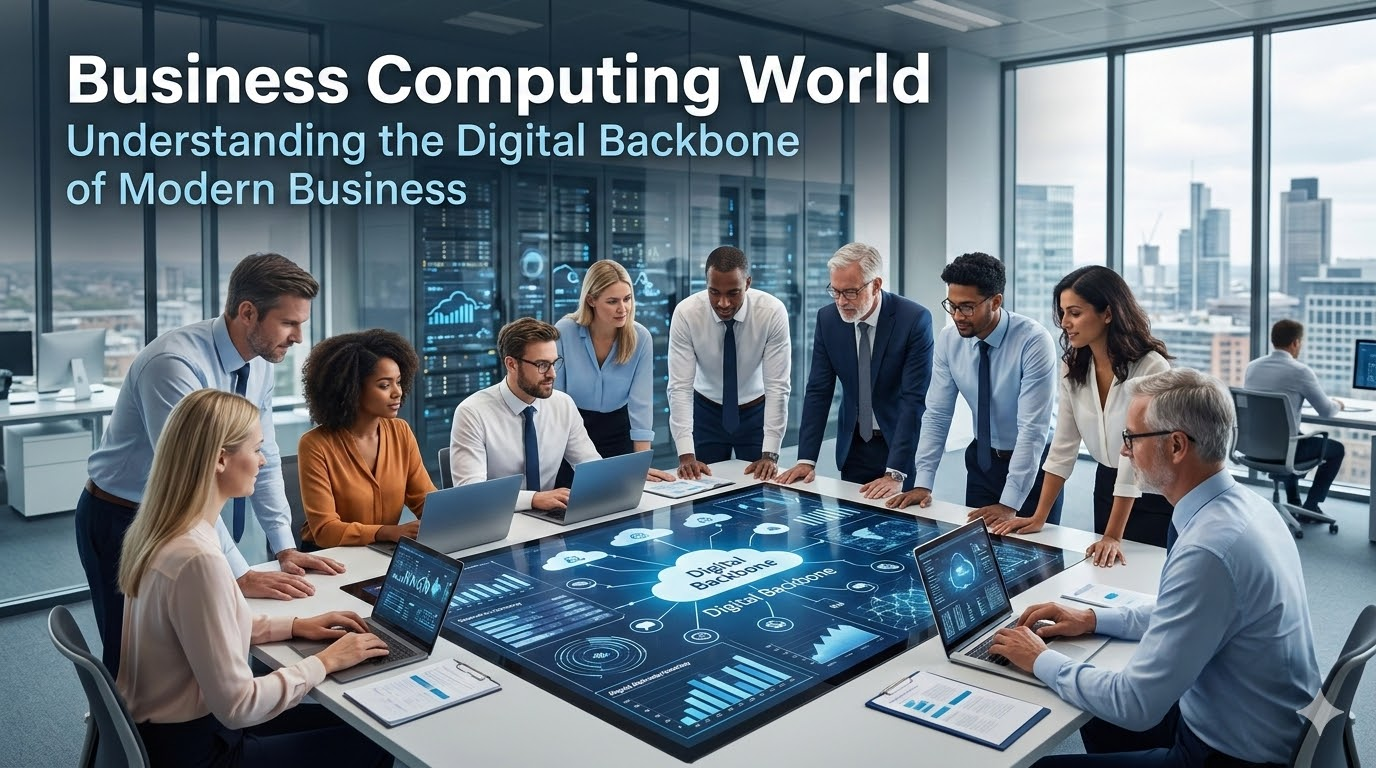
The business computing world has become the foundation of modern commerce, shaping how organizations operate, communicate, and compete in a technology-driven economy. From small startups to multinational corporations, businesses rely heavily on computing systems to manage operations, analyze data, improve efficiency, and deliver better customer experiences.
In earlier decades, computing in business was limited to large organizations with significant budgets and specialized IT teams. Today, the landscape has completely changed. Advances in cloud computing, software platforms, data analytics, and artificial intelligence have made powerful computing tools accessible to businesses of all sizes. As a result, the business computing world has grown into a vast ecosystem where technology and business strategy work closely together.
Understanding the structure, technologies, and future direction of the business computing world is essential for entrepreneurs, executives, and professionals who want to remain competitive in a rapidly evolving digital environment.
What Is the Business Computing World?
The business computing world refers to the collection of technologies, systems, and digital processes that organizations use to support and manage their operations. It includes computer hardware, software applications, networking infrastructure, data systems, and digital tools designed to improve productivity and decision-making.
At its core, the business computing world enables organizations to process information quickly and accurately. Businesses can store vast amounts of data, automate complex tasks, and gain insights that guide strategic decisions.
This environment includes a wide range of technologies such as:
- Enterprise software platforms
- Cloud computing services
- Cybersecurity systems
- Data analytics tools
- Artificial intelligence applications
- Digital communication platforms
Together, these technologies form the digital infrastructure that powers modern organizations.
The Evolution of the Business Computing World
The development of the business computing world has occurred in several major stages, each introducing new capabilities that transformed business operations.
Early Computing Systems
In the early years of computing, businesses used large mainframe computers primarily for data processing tasks such as payroll, accounting, and inventory management. These systems were expensive and required specialized operators, limiting their use to large corporations and government institutions.
Despite these limitations, early computing systems laid the foundation for the modern business computing world by demonstrating how digital technology could improve efficiency and accuracy.
The Personal Computer Revolution
The introduction of personal computers during the 1980s changed the business computing world dramatically. Employees could now perform tasks directly on their desktops, including word processing, spreadsheet analysis, and database management.
This shift increased productivity and allowed computing technology to spread across different departments within organizations.
The Rise of the Internet
The internet revolution of the 1990s expanded the business computing world by connecting organizations globally. Businesses began using email, websites, and online databases to communicate with customers and partners.
E-commerce platforms also emerged during this period, enabling businesses to sell products and services online. The internet turned computing into a central component of business strategy.
Cloud and Mobile Computing
The introduction of cloud computing marked another major transformation in the business computing world. Companies no longer needed to maintain expensive hardware infrastructure. Instead, they could access computing power and storage through cloud-based services.
At the same time, mobile technology enabled employees to access business systems from smartphones and tablets. This shift created a more flexible and mobile workforce.
The Age of Artificial Intelligence
Today, artificial intelligence and machine learning are shaping the next stage of the business computing world. Businesses are using AI systems to analyze large datasets, automate routine tasks, and improve customer interactions.
These technologies are making computing systems smarter and more capable of supporting complex decision-making processes.
Core Components of the Business Computing World
The business computing world is built on several key components that work together to support digital operations.
Hardware Infrastructure
Hardware forms the physical foundation of the business computing world. This includes servers, computers, storage devices, networking equipment, and mobile devices used by employees.
Modern hardware systems are designed to handle large workloads while maintaining reliability and security.
Software Applications
Software plays a crucial role in enabling business activities within the business computing world. Different types of applications support various organizational functions, including:
- Accounting and financial management
- Customer relationship management
- Human resources management
- Supply chain operations
- Project management
These applications help businesses streamline processes and maintain accurate records.
Networking Systems
Networks allow computers and devices to communicate with each other. In the business computing world, networks connect employees, departments, and global offices.
Reliable networking infrastructure ensures that information flows efficiently throughout the organization.
Data Management Systems
Data is one of the most valuable resources in the business computing world. Businesses collect information from multiple sources, including transactions, customer interactions, and operational processes.
Data management systems store, organize, and protect this information, making it accessible for analysis and decision-making.
The Role of Cloud Computing in the Business Computing World
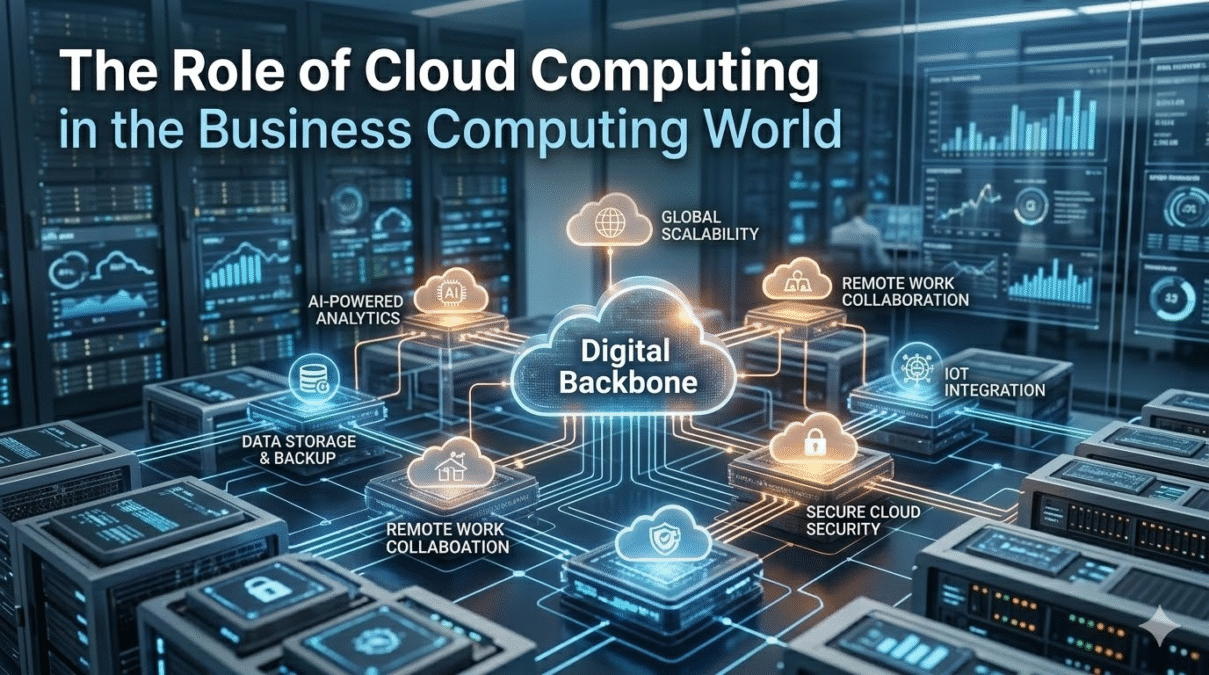
Cloud computing has become one of the most influential technologies in the business computing world. Instead of storing data and running applications on local servers, businesses can use remote cloud platforms that provide scalable computing resources.
Cloud computing offers several advantages:
- Reduced infrastructure costs
- Easy scalability for growing businesses
- Remote access to systems and data
- Faster deployment of new applications
Because of these benefits, cloud technology has become a central part of the modern business computing world.
Data Analytics and Decision-Making
Data analytics has transformed how businesses make decisions in the business computing world. Organizations now generate enormous volumes of data through digital transactions, online interactions, and operational systems.
By analyzing this data, companies can uncover patterns and insights that improve performance.
For example, businesses can use analytics to:
- Identify customer preferences
- Forecast product demand
- Optimize supply chains
- Improve marketing strategies
Data-driven decision-making is now a key competitive advantage in the business computing world.
Cybersecurity in the Business Computing World
As digital systems become more important, cybersecurity has become a critical concern within the business computing world. Businesses must protect sensitive information such as financial records, customer data, and proprietary research.
Cyber threats include hacking attempts, malware attacks, phishing scams, and ransomware incidents. These risks can lead to financial losses and damage a company’s reputation.
To address these threats, organizations implement strong security measures, including:
- Encryption technologies
- Multi-factor authentication
- Network monitoring systems
- Security awareness training for employees
Cybersecurity strategies are essential for maintaining trust and stability in the business computing world.
Automation and Artificial Intelligence
Automation has become a powerful force within the business computing world. Many routine tasks that once required human effort can now be handled by software systems.
Examples of automated processes include:
- Customer support chat systems
- Invoice processing
- Inventory tracking
- Marketing campaign management
Artificial intelligence enhances automation by allowing systems to learn from data and improve over time. AI-driven tools can detect fraud, analyze customer behavior, and recommend business strategies.
As automation technologies advance, the business computing world continues moving toward smarter and more efficient operations.
Communication and Collaboration Technologies
Communication tools play an essential role in the business computing world, especially as remote and hybrid work environments become more common.
Modern businesses rely on digital collaboration platforms that allow teams to work together regardless of physical location. These tools support activities such as:
- Video conferencing
- Instant messaging
- File sharing
- Project coordination
Effective communication technologies ensure that employees remain connected and productive within the business computing world.
Challenges Facing the Business Computing World
Although the business computing world offers many benefits, it also presents several challenges that organizations must navigate carefully.
Rapid Technological Change
Technology evolves quickly, making it difficult for businesses to keep their systems up to date. Companies must invest in continuous learning and infrastructure upgrades.
Cybersecurity Risks
As digital operations expand, cyber threats become more sophisticated. Businesses must remain vigilant and adopt strong security practices.
Integration Complexity
Organizations often use multiple software systems that must work together seamlessly. Integrating these systems can require significant technical expertise.
Data Privacy Regulations
Governments around the world are introducing strict data privacy laws. Businesses operating in the business computing world must ensure they comply with these regulations while maintaining customer trust.
The Future of the Business Computing World
The business computing world will continue evolving as new technologies emerge and reshape the business landscape. Several trends are likely to influence the future of business computing.
Artificial Intelligence Expansion
AI technologies will become more deeply integrated into business systems, helping organizations automate complex processes and generate predictive insights.
Edge Computing
Edge computing will allow data processing to occur closer to where information is generated, reducing latency and improving system performance.
Quantum Computing Research
Although still in early development, quantum computing has the potential to solve complex problems that traditional computers cannot handle efficiently.
Sustainable Technology
Businesses are increasingly focusing on environmentally sustainable computing solutions, including energy-efficient data centers and green IT practices.
These developments will further expand the capabilities of the business computing world and open new opportunities for innovation.
Why the Business Computing World Matters
The importance of the business computing world cannot be overstated. Technology now influences nearly every aspect of business operations, from product development to customer engagement.
Organizations that successfully integrate computing technologies can achieve:
- Higher productivity
- Faster innovation
- Better customer experiences
- Improved decision-making
In contrast, businesses that fail to adapt to the digital environment risk losing competitiveness in modern markets.
Understanding the business computing world allows companies to make smarter investments in technology and build strategies that support long-term growth.
Conclusion
The business computing world has become the digital backbone of modern business operations. Over time, computing technologies have evolved from simple data processing tools into powerful systems that support global commerce, data analysis, automation, and communication.
Today, businesses depend on computing technologies to operate efficiently, understand customers, and compete in increasingly digital markets. Cloud computing, artificial intelligence, cybersecurity, and data analytics are now central components of the business computing world, shaping how organizations function and grow.
As technology continues advancing, the business computing world will play an even greater role in shaping the future of business. Companies that embrace innovation, invest in digital infrastructure, and develop strong technology strategies will be best positioned to succeed in the rapidly changing digital economy.

