


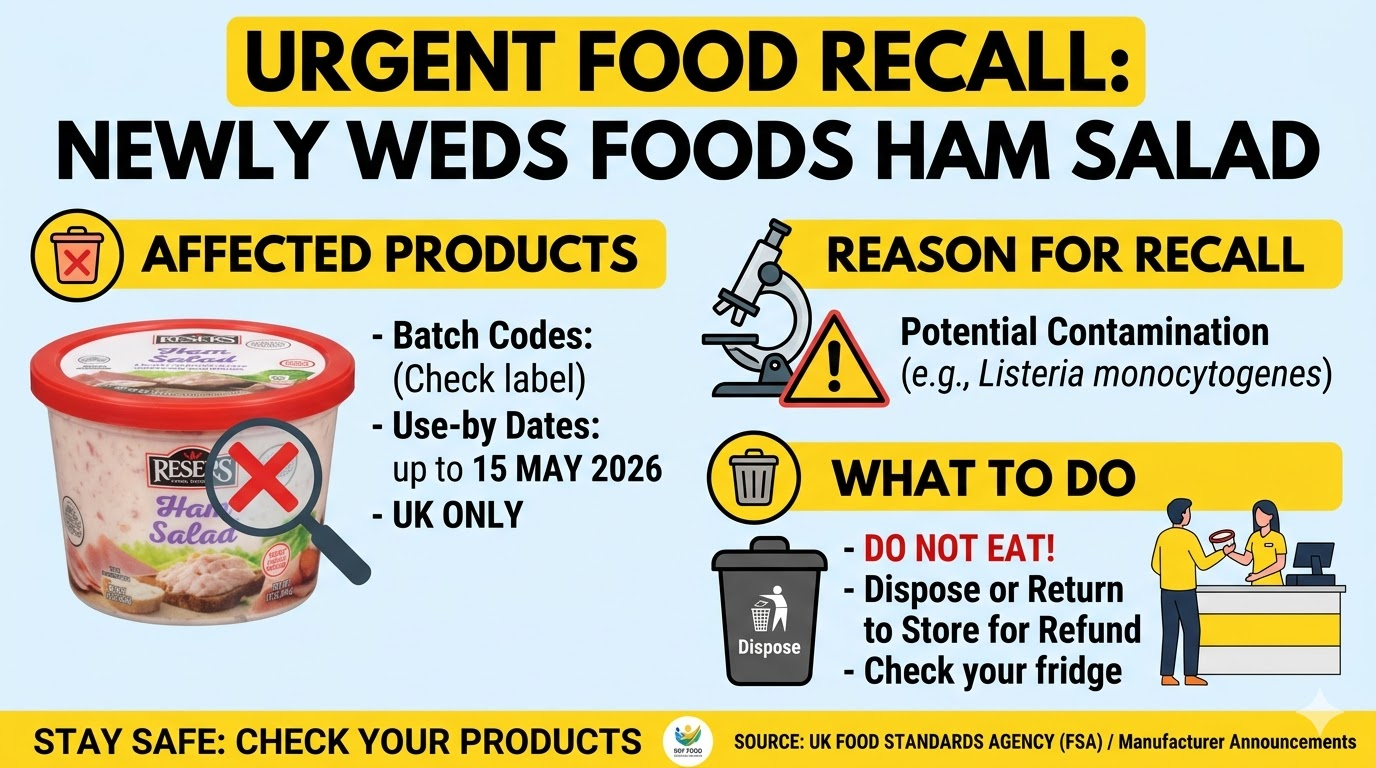
The newly weds foods ham salad recall has become a major concern for consumers in the UK due to the potential risk of Listeria monocytogenes contamination. This recall affects certain ready-to-eat ham salad products that include breadcrumbs from Newly Weds Foods. Listeria is a harmful bacterium that can cause serious illness, particularly in vulnerable populations such as pregnant women, older adults, and people with weakened immune systems. Understanding the recall and taking appropriate precautions is vital to ensure public safety.
The recall was prompted after health authorities discovered contamination risks in the production process, prompting a swift response from both US and UK food safety organisations. Although no illnesses have been reported in the UK to date, consumers are advised to be cautious and carefully check any ham salad products in their homes. Staying informed about recalled products is essential to prevent potential exposure to harmful bacteria and to maintain confidence in ready-to-eat foods.
What Happened in the Newly Weds Foods Ham Salad Recall
The newly weds foods ham salad recall was issued after health authorities identified possible contamination of ham salad products with Listeria monocytogenes. The contamination was traced to breadcrumbs supplied by Newly Weds Foods, which are used in the production of certain ready-to-eat ham salads. The recall is a precautionary measure to protect consumers from potential foodborne illness and reflects the high standards of food safety monitoring in both the United States and the UK.
Authorities such as the USDA and FSIS issued official statements outlining the details of the recall, including affected products, batch numbers, and sell-by dates. In the UK, local public health agencies are closely monitoring imports and advising consumers to remain vigilant. The recall demonstrates how food safety organisations respond quickly to contamination risks, emphasising the importance of awareness and prompt action from consumers.
Which Ham Salad Products Are Affected
The newly weds foods ham salad recall specifically affects products that contain breadcrumbs supplied by Newly Weds Foods. Notable items include Reser’s Fine Foods Ham Salad, sold in 12-ounce tubs, and Molly’s Kitchen Ham Salad, sold in 5-pound tubs. Consumers should carefully check the packaging for sell-by dates and batch numbers to ensure they are not using a recalled product, as even small amounts of contaminated ham salad can pose a health risk.
Identifying affected products is crucial to consumer safety. Anyone who has purchased these ham salads should either return them to the point of sale or dispose of them safely. Retailers and health authorities are providing clear guidance to ensure that recalled items do not remain in circulation, helping to minimise the risk of Listeria exposure in households across the UK.
Understanding the Listeria Risk
Listeria monocytogenes is a dangerous bacterium that can lead to severe health complications, particularly in individuals with weakened immune systems. Infected individuals may experience symptoms such as fever, muscle aches, nausea, and diarrhoea, and in more severe cases, infection can result in hospitalisation. Pregnant women are especially vulnerable, as Listeria infection can lead to miscarriage or serious illness in newborns. Awareness of this risk is critical for consumers handling ready-to-eat products like ham salad.
The newly weds foods ham salad recall highlights the importance of stringent quality control and monitoring of ingredients such as breadcrumbs, which can introduce contamination into finished products. Consumers must take these alerts seriously and avoid consuming any ham salad that may be affected. Following proper food safety practices at home, including checking labels and storage conditions, further reduces the risk of Listeria exposure.
Actions Consumers Should Take
Consumers should immediately check their homes for any ham salad products affected by the newly weds foods ham salad recall. It is essential not to consume recalled items under any circumstances, even if the product appears normal. Affected products can be returned to the retailer or disposed of safely to prevent accidental ingestion. Following official guidance ensures the safety of all household members.
In addition to returning or disposing of recalled products, consumers are encouraged to contact local food safety helplines for further advice. Maintaining good hygiene and storing ready-to-eat products correctly can also help reduce the risk of contamination. Being proactive and cautious is the best way to protect against potential foodborne illness, particularly during recalls involving Listeria.
Official Statements and Public Health Alerts
Health authorities have released official statements regarding the newly weds foods ham salad recall, warning consumers about the potential risk of Listeria contamination. The USDA and FSIS in the United States have issued detailed alerts, while UK public health agencies are monitoring the situation to protect local consumers. These statements provide vital guidance on identifying recalled products and the necessary steps to stay safe.
The official alerts emphasise the importance of consumer vigilance and the role of food safety authorities in preventing illness. Regular updates are provided to keep the public informed, and authorities stress that even small amounts of recalled ham salad should not be consumed. Staying up-to-date with these alerts helps maintain consumer safety and confidence in the food supply chain.
How Recalls Like This Impact UK Consumers
The newly weds foods ham salad recall highlights the broader implications of food safety recalls in the UK. Ready-to-eat products are convenient, but contamination incidents remind consumers to remain vigilant and informed. Checking sell-by dates, batch numbers, and product sources can prevent exposure to harmful bacteria, helping to protect public health.
Food recalls also emphasise the importance of staying connected to official sources of information. UK consumers should regularly consult public health websites and news outlets to monitor any ongoing recalls. Awareness and caution are key to reducing the impact of such incidents, ensuring that households remain safe and confident in the products they purchase.
Tips for Staying Safe With Ready-to-Eat Salads
To prevent exposure to harmful bacteria, consumers should always read labels carefully and verify the source of ready-to-eat products. Proper storage, including refrigeration and correct handling, helps reduce the risk of contamination. In cases like the newly weds foods ham salad recall, it is essential to take immediate action if affected products are identified.
Choosing trusted brands and regularly checking official food safety websites can prevent exposure to contaminated foods. Being proactive and cautious when purchasing and consuming ready-to-eat salads is a practical approach to maintaining household safety. These steps not only protect against Listeria but also promote overall food hygiene awareness.
Conclusion
The newly weds foods ham salad recall serves as a reminder of the potential risks associated with ready-to-eat products. Consumers in the UK should carefully check their ham salad for any affected items, avoid consumption, and follow guidance from health authorities. Staying informed and taking precautionary measures helps minimise the risk of Listeria infection while maintaining confidence in the food supply. Awareness and action remain the best tools for consumer safety during such recalls.

