


Introduction
The word tcintikee may seem unfamiliar at first glance, yet its rise in search interest and online discussion signals something worth understanding. While not part of traditional language databases, tcintikee has become a term of curiosity, intrigue, and adoption among certain online communities. This article delves deeply into the meaning, cultural emergence, linguistic characteristics, and potential future of tcintikee, offering a thorough and authoritative examination of the term from multiple angles. By the end, you will have a complete understanding of what tcintikee represents, how it functions in digital spaces, and why it has gained traction.
Understanding the Term Tcintikee
What Is Tcintikee?
At its core, tcintikee is a coined term—an invented word with no historical origin in established language dictionaries. It does not stem from Latin, Greek, or any widely recognized linguistic tradition. Instead, tcintikee exists primarily in digital contexts where meaning is created through use rather than through formal definition.
In this sense, tcintikee resembles other modern digital neologisms that gain recognition not through official lexicons, but through community engagement and cultural adoption. Words like “meme,” “blog,” and “vlog” followed similar paths: they began without formal definition, only to be shaped by usage and, ultimately, accepted into mainstream understanding.
The Linguistic Composition of Tcintikee
One of the first elements that draws attention to tcintikee is its unique phonetic structure. The word is visually and aurally distinctive, composed of consonant clusters and vowel placement that do not conform to the patterns seen in most English vocabulary. This unconventional form gives it a rhythmic quality, contributing to its memorability.
The uniqueness of the word also plays a role in its adaptability. Because tcintikee carries no inherited semantic baggage, individuals and communities can ascribe meaning to it in ways that serve their interests. It is neutral, flexible, and—importantly—distinctive.
Why Words Like Tcintikee Matter in the Digital Age
The rapid evolution of digital culture has produced countless new words, many of which begin as niche terms before spreading widely. These words often reflect changes in technology, social behavior, and collective identity. Tcintikee is part of this linguistic evolution: a term born in the digital realm that invites interpretation, participation, and meaning‑making.
This phenomenon is not random. In an era where online visibility and identity matter, unique terms function as cultural markers—signals of belonging, creativity, or novelty. Tcintikee exemplifies this trend, offering a platform for individuals to explore language, identity, and expression in a space unbound by traditional definitions.
Digital Emergence and Community Use
How Tcintikee First Appeared Online
The exact origin point of tcintikee is difficult to trace, as is common with emerging digital terms. It appears to have surfaced in online forums and social platforms where users experiment with language and new forms of expression. Over time, its presence expanded as more users encountered and shared the term.
Unlike viral phenomena that explode overnight due to a specific event or influencer, tcintikee has grown gradually. Its spread suggests a slow‑burning curiosity: people encounter it, wonder about its meaning, and continue using it within their own digital contexts.
Social Media Adoption
One of the most visible arenas for the use of tcintikee is social media. Users on platforms like Instagram, Twitter, and TikTok have adopted the term in usernames, captions, and creative content. For many, the appeal lies in its originality: tcintikee functions as a personal or artistic identifier that stands out amid commonplace language.
For example, content creators who prioritize unique branding may choose tcintikee as part of their digital persona. This choice conveys a sense of individuality and distinction that can be difficult to achieve with conventional words or names. Because tcintikee is not tied to existing meaning, it becomes a blank slate—a space for personal interpretation.
Communities and Subcultures
Beyond social platforms, tcintikee has found traction in niche online communities where language play and experimentation are valued. These communities often explore the boundaries of meaning, inventing terms that carry inside meanings, humor, or symbolism known primarily to group members.
In these contexts, tcintikee may hold different connotations. For some, it can signify inclusion or insider knowledge; for others, it may function as a playful linguistic artifact. The diversity of interpretation enriches its cultural relevance while maintaining the term’s fluidity.
Interpretations and Speculative Meanings
Tcintikee as a Meaningful Label
Because tcintikee lacks a fixed definition, interpretations vary widely. Some view it as a creative label—an identity tag that resists conventional categorization. In this sense, tcintikee can be seen as a personal emblem, a word chosen not for what it means in traditional language, but for what it allows the user to express.
This freedom opens up possibilities. For instance, an artist might adopt tcintikee as a brand name for their work, giving it a sense of mystique and uniqueness. A content creator might use it as a signature in digital portfolios or to differentiate themselves in saturated markets.
Symbolic and Conceptual Interpretations
Others take a more symbolic approach, using tcintikee as a conceptual placeholder in narratives, stories, or creative experiments. In this view, the term becomes an imaginative tool—a word that invites interpretation rather than imposing meaning.
This aligns with broader linguistic trends in digital culture where emphasis is placed on participatory meaning‑making. Online communities often generate language that functions more like shared code than traditional definitions. Within these micro‑cultures, tcintikee can evolve its own internal meanings based on shared usage and context.
Metaphorical and Abstract Uses
Beyond literal or brand‑centric uses, tcintikee has potential metaphorical applications. In creative writing, for example, the term could serve as an abstract concept—representing ambiguity, transformation, or novelty. Because it lacks preconceived definition, it can be framed to represent whatever idea the writer wishes to explore.
This abstract flexibility is rare in traditional vocabulary. Most words carry definitional weight that limits how they can be interpreted. Tcintikee, on the other hand, grants permission for imagination to guide its meaning.
The Linguistic Value of Tcintikee
Challenges and Opportunities in Meaning
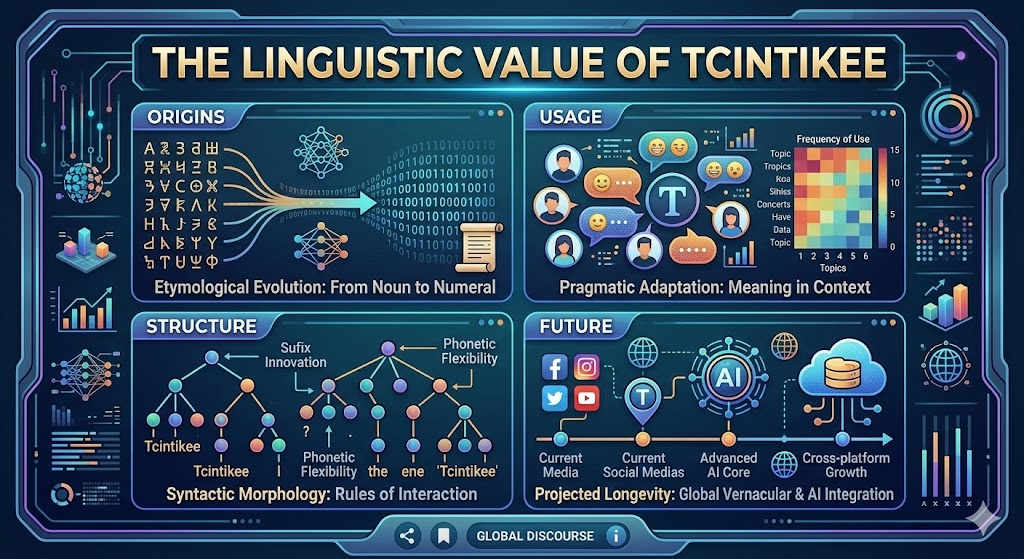
Some linguists might argue that tcintikee lacks inherent meaning and therefore holds limited linguistic value. From a traditional standpoint, a word without a shared definition cannot function effectively as language. However, this perspective overlooks the evolving nature of language itself.
Language is not static—it grows through use, adaptation, and cultural context. New words enter dictionaries only after they have been widely used with consistent meaning. The fact that tcintikee is currently undefined does not negate its potential future significance.
Moreover, tcintikee represents an opportunity to explore how language evolves in digital environments. It highlights the dynamic relationship between linguistic innovation and community engagement. The very ambiguity that makes tcintikee challenging is also what makes it fascinating: it sits at the intersection of language, identity, and digital culture.
The Role of Unconventional Words in Modern Communication
Words like tcintikee demonstrate that modern communication extends beyond utility. Language today also functions as an aesthetic, an identity marker, and a creative medium. In digital spaces where users curate their online personas, the linguistic choices they make reflect more than communication needs—they reflect self‑expression, cultural alignment, and social identity.
In this context, tcintikee serves as an example of how unconventional words can flourish. Its emergence illustrates a broader trend: digital communities are not just consumers of language, but creators of it. They shape meaning collaboratively, often outside the confines of formal linguistic institutions.
Practical Applications of Tcintikee
Branding and Digital Identity
One of the most practical applications of tcintikee lies in branding. Unique, easily distinguishable names are valuable in competitive digital landscapes where searchability and memorability can determine visibility. Unlike traditional words that may already be widely used, tcintikee offers originality by default.
For emerging brands, especially in creative industries, tcintikee provides a name that can be trademarked or uniquely associated with a product, service, or persona. It is not burdened by prior meaning, allowing brand narratives to be built from scratch.
Social Networking and Online Profiles
In social networking, tcintikee functions as a distinctive username or profile label. Many platforms require users to select unique handles; common names are often unavailable. Adopting a term like tcintikee solves this practical challenge while also contributing to personal branding.
Beyond practicality, using tcintikee as part of a digital identity signals creativity and individuality. It suggests a willingness to engage with language in unconventional ways, which can attract interest and foster community engagement.
Creative and Artistic Expression
Artists, writers, and creators can use tcintikee as a tool for exploration. In narratives, it can serve as an abstract concept or symbol. In visual arts, it can be incorporated as a title or motif. In music, it might be used for lyrical experimentation or branding.
Its flexibility makes tcintikee particularly suited to interdisciplinary projects where traditional language would be limiting. Creators often seek terms that are open‑ended and evocative; tcintikee fits this need by offering a space for interpretive meaning.
Cultural and Future Perspectives
How Tcintikee Reflects Digital Culture
The story of tcintikee is ultimately a story about digital culture itself. It reflects how linguistic innovation occurs in online spaces, how communities adopt new terms, and how meaning develops through use rather than prescription.
In traditional linguistic evolution, words entered language through speech and were eventually codified in dictionaries. Today, digital platforms accelerate this process. A term can spread across geographies in moments, shaped by user engagement rather than academic approval.
Tcintikee exemplifies this shift: it exists because people encountered it, used it, and continued to assign context to it. Its presence echoes the dynamic nature of modern communication.
Potential Trajectories for Tcintikee
What does the future hold for tcintikee? Several possibilities exist:
- Standardization: If tcintikee gains widespread usage with a consistent meaning, it could enter formal lexicons.
- Brand Establishment: It might become associated with specific brands, products, or artistic movements.
- Cultural Artifact: Even without a fixed meaning, it could remain a symbol of digital language innovation.
- Creative Term: Writers and artists may continue to use it as a flexible concept in their works.
None of these outcomes are certain, but all reflect the potential paths of a word that emerged not through tradition, but through participation.
Conclusion
Tcintikee is more than a curious string of letters—it’s a reflection of how language evolves in the digital age. Born without formal definition, it illustrates the power of communities to shape meaning, identity, and expression in online environments. Its adaptability, uniqueness, and cultural resonance make tcintikee a fascinating case study in modern linguistic innovation.
In examining tcintikee, we see how unconventional words can transcend novelty to become significant markers of identity, creativity, and culture. Whether tcintikee becomes widely defined in the future or remains a flexible term crafted by individual users, its existence underscores the dynamic, participatory nature of language today.
By understanding tcintikee, we gain insight not only into a specific digital term, but into the broader mechanisms of linguistic evolution, cultural identity, and the human imagination in the connected world.

