


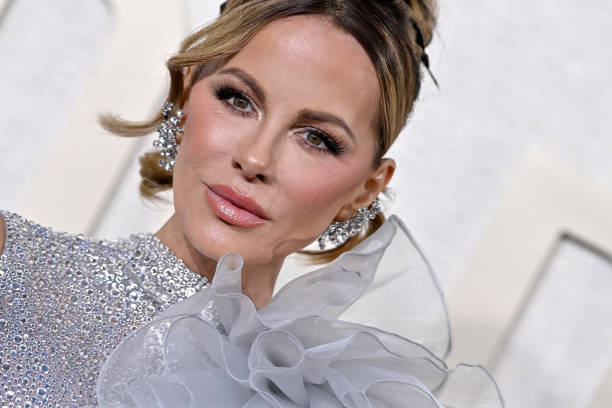
Kate Beckinsale has built a career that refuses to sit still. Some actors become easy to describe after a few films. They find a lane, stay there, and let the audience know what to expect. Beckinsale did the opposite. She began as the sharp young British actress who seemed born for literature, period drama, and elegant dialogue. Then she became a Hollywood romantic lead. Then she stepped into black leather, picked up weapons, and became one of modern fantasy cinema’s most recognisable action figures.
That shift could have looked like a career accident. It was not. Beckinsale’s best roles all share the same hidden engine. She often plays women who watch before they speak, calculate before they move, and keep their emotions behind a locked door. Whether she is standing in a Jane Austen drawing room or stalking through a vampire war, she rarely looks lost. She looks as if she has already read the room and found three exits.
Her story begins in London, inside a family where performance was not a distant dream. It was part of daily life. Her father, Richard Beckinsale, was one of the most loved comic actors on British television. Her mother, Judy Loe, also worked as an actress. Kate grew up near the business of acting, but not in a cosy fairy tale version of it. She was five when her father died suddenly. That loss placed grief at the centre of her childhood, and it gave her public story a shadow before she had even chosen a public life.
The death of Richard Beckinsale followed her in a strange way. He remained famous, loved, and remembered. She had to grow up with a father who was both absent and publicly present. Many people knew his face, his voice, and his comic timing. She knew the silence left behind. That kind of childhood can create a complicated relationship with attention. It can also teach a person to carry pain neatly, without handing it over to every stranger who asks.
Beckinsale was not only an actor’s daughter. She was also a clever, bookish child with a gift for language. She wrote fiction and poetry, won young writer awards, and later studied French and Russian literature at Oxford. That part of her story matters because it explains something in her acting. She listens to words. She knows how a sentence can hide a threat, a joke, or a wound. She is not an actress who relies only on expression. She often works through rhythm.
Her early career arrived almost too neatly for someone with her background. While still young, she was cast in Kenneth Branagh’s Much Ado About Nothing. It placed her in Shakespeare, surrounded by established actors, in a film that made language feel sunny and alive. Beckinsale played Hero, a role that could easily disappear beside louder characters. She did not overplay it. She held her place with quiet focus.
That early restraint became a theme. Beckinsale did not enter film as a noisy performer demanding attention. She was more precise than that. In Cold Comfort Farm, she played Flora Poste with crisp intelligence. Flora walks into a gloomy rural family and begins correcting the emotional furniture of everyone around her. It is a role built on poise, wit, and the calm belief that chaos can be sorted if one simply refuses to panic.
Her period roles could have trapped her. British cinema has often placed clever young actresses into bonnets, country houses, and polite conversations, then praised them for being tasteful. Beckinsale had the face and education for that world, but she also had an edge that made the roles sharper. She did not make intelligence soft. She made it active. In her hands, good manners could feel like strategy.
That quality became clearer in The Last Days of Disco. The film gave her a modern setting, but the social rules were just as strict as any period drama. Beckinsale played Charlotte, a young woman who is clever, difficult, funny, and often unkind. She did not try to make Charlotte adorable. She let her be vain, sharp, and entertainingly awful. It was one of the first roles that showed how well Beckinsale could play social danger.
Hollywood noticed her, but Hollywood often notices only the easiest thing. In Beckinsale’s case, it noticed beauty, accent, elegance, and romantic screen presence. Pearl Harbor gave her a huge American platform, but not the most interesting use of her talent. She played a nurse caught between two men in a war romance that had more space for explosions than emotional detail. The film made her more famous, but it also risked flattening her into a glossy leading lady.
Serendipity pushed that image further. The film became a soft romantic favourite for many viewers, with its story of chance meetings and almost-missed love. Beckinsale brought warmth to it, but again the role showed only part of her. She could play romantic charm, but she was never only charming. There was always something more controlled, more ironic, and more alert beneath the surface.
That is why Underworld changed her career so sharply. Selene did not ask Beckinsale to be sweet. Selene asked her to be cold, disciplined, wounded, and dangerous. The role looked like a sudden left turn because audiences had been trained to see Beckinsale through literary and romantic frames. Yet the character made sense for her. Selene was another controlled woman inside a violent system. She simply carried weapons instead of witty lines.
The first Underworld film became more than a genre hit. It gave Beckinsale an image that stuck. The black outfit, the pale face, the blue light, the weapons, the vampire mythology, all of it turned Selene into a cult figure. The danger of such a role is that it can swallow an actor whole. Many people who know Beckinsale only through posters and clips might assume she was always an action star. That misses the point. Selene worked because Beckinsale brought stillness, not just movement.
Her action style was never built on swagger. She did not play Selene as someone enjoying the violence. She played her as someone trained by loss, betrayal, and survival. Her calm made the character more powerful. She seemed less like a superhero and more like a person who had removed every unnecessary emotion in order to keep going. That restraint gave the franchise its centre.
The Underworld films also changed how directors and audiences read Beckinsale’s body on screen. Earlier, her stillness suggested intelligence or social control. After Selene, stillness suggested a threat. A pause could mean she was about to speak, or it could mean she was about to attack. That is a rare shift for an actor. The same quality found a new meaning in a different genre.
Van Helsing followed soon after, placing her inside another gothic world of monsters, costumes, and large-scale fantasy. It was louder, more chaotic, and less elegant than Underworld, but it showed how quickly the industry had rebranded her. In a short span, Beckinsale went from literary adaptations and romantic films to vampires, werewolves, and monster hunting. Hollywood had found a new box for her almost as quickly as it had abandoned the old one.
The strange thing is that both boxes were too small. Beckinsale was not simply the period-drama actress, and she was not simply the action heroine. Her career makes more sense when viewed through temperament rather than genre. She often plays people who are composed because they have to be. The setting changes. The armour changes. The emotional mechanism remains.
Her best later reminder came with Love & Friendship. The film returned her to Jane Austen, but not to softness. Beckinsale played Lady Susan Vernon, a widow with a brilliant talent for manipulation. Lady Susan is charming because she has decided charm is useful. She is polite because politeness opens doors. She is dangerous because she understands weakness and has no serious interest in pretending otherwise.
That role felt like a perfect meeting between old and new Beckinsale. It used her literary background, her comic timing, her cold control, and her ability to make a character watchable without making her good. Lady Susan could not fight like Selene, but she could ruin a person with a sentence. Beckinsale played her with the confidence of someone who knew the joke and refused to wink at it.
The performance also proved that Beckinsale’s comic talent had been underused. She has always had a dry, strange sense of humour, both on screen and in public. Her interviews and social media presence often reveal a person much sillier than her polished image suggests. That contrast is part of her appeal. She can look like an old Hollywood figure on a red carpet, then speak like someone who finds the whole ritual faintly absurd.
The gap between image and personality has followed her for years. On screen, she can seem icy, formal, and controlled. Off screen, she often appears playful, odd, and quick. The public sometimes struggles with people who contain both. It wants a fixed version. Beckinsale has never seemed especially interested in offering one.
Her personal life has also been folded into her public identity, especially her long relationship with Michael Sheen. They met before both became widely known, had a daughter, Lily, and later separated. What made the story unusual was not the separation, but the warmth that seemed to remain afterwards. Their continued friendship became part of Beckinsale’s public image, not as a scandal, but as a reminder that adult relationships can be complicated without becoming ugly.
Motherhood added another layer to her career. Beckinsale was never presented as a purely private figure, yet she did not turn her daughter into a career accessory either. She moved through Hollywood with the strange balance demanded of actresses who are expected to be visible, desirable, funny, available, private, strong, and never too tired to smile. That pressure rarely appears in film credits, but it shapes careers.
Beckinsale’s beauty has both helped and restricted her. It opened doors, of course, but it also encouraged lazy readings of her talent. Some viewers assume a beautiful actress is doing less work because the camera already likes her. That is a mistake. Beckinsale’s strongest performances depend on precision. She knows when to hold back. She knows when to let a line cut. She knows how to make a character’s intelligence visible without turning every scene into a demonstration.
Her face has often been used as glamour, but her eyes often do something less decorative. They assess. In her best scenes, she seems to be measuring people while they underestimate her. That is why she works so well in roles built around manners or survival. Drawing rooms and battlefields are not as different as they first appear. Both reward people who understand timing, weakness, and power.
Her lesser-known work shows a willingness to step away from obvious glamour. Snow Angels gave her a darker, more wounded role. Nothing But the Truth placed her under moral and legal pressure as a journalist protecting a source. These films did not dominate popular memory, but they matter because they show that Beckinsale kept returning to tension, not comfort. She did not only chase the largest screen.
Not every choice worked. Some films used her presence without giving her enough to do. Some thrillers leaned on her coolness but forgot to build a character beneath it. Some action roles repeated the surface of Selene without the same emotional force. That is not unusual in a long career. What is more interesting is how often Beckinsale remained more watchable than the material around her.
Her career also says something about how the film industry treats actresses who refuse easy ageing narratives. Beckinsale has spent decades under public attention, with commentary often focused on her looks, relationships, and body rather than her craft. Male actors are often allowed to age into authority. Actresses are frequently asked to explain their appearance as if it were a public document. Beckinsale has pushed back at times with humour, irritation, and refusal.
That refusal feels connected to her screen presence. She does not apologize well. Even in vulnerable roles, she rarely collapses into helplessness. She often seems most herself when playing women who understand how they are being watched and decide to use that fact rather than deny it. Lady Susan does it socially. Selene does it physically. Charlotte does it cruelly. Beckinsale does it professionally.
Her family history still gives her story an emotional root. Being Richard Beckinsale’s daughter could have become a permanent label in Britain. Instead, she built an international career large enough to stand on its own. That does not erase the inheritance. It complicates it. She carries a famous name, but her career belongs to a different era, different genres, and different pressures.
There is also something quietly unusual about the combination of Oxford literature and vampire mythology. It sounds like a joke, but it explains the career better than many serious summaries. Beckinsale’s path moved from books to bloodlines, from Austen to ammunition, from young writer awards to action franchises. The surprise is not that she changed direction. The surprise is that the same acting intelligence survived each change.
A more ordinary article might list her “best roles” as separate achievements. A better way is to see them as arguments with one another. Hero says Beckinsale can belong in classical romance. Flora Poste says she can control a comedy of manners. Charlotte says she can make social cruelty funny. Selene says she can carry a fantasy franchise with silence and discipline. Lady Susan says she can turn language into a blade. Together, these roles reject the idea that she has had one career.
Her unknown facts are not only trivia. Yes, she was raised around actors. Yes, she studied Russian and French literature. Yes, she won writing awards when she was young. Yes, she moved from British cinema into Hollywood and then into cult action. But the deeper fact is that she has always been a language person trapped, sometimes usefully and sometimes awkwardly, inside an image-driven industry.
That tension appears even in her most commercial work. Underworld sold style, but Beckinsale gave it grief. Serendipity sold romance, but she gave it intelligence. Love & Friendship sold period wit, but she gave it an appetite. Her characters often want something, even when the script does not fully explore it. She brings intention to roles that could have remained decorative.
The public often remembers actors through costumes. Beckinsale has several: the Shakespearean white dress, the romantic lead’s soft wardrobe, the vampire warrior’s black leather, the Austen widow’s elegant gowns. Costumes matter because cinema is visual, but they can also mislead. The real continuity is not in what she wears. It is in the way she holds herself. She tends to make stillness feel chosen.
That chosen stillness may be the clearest Beckinsale signature. It is not emptiness. It is preparation. In a period film, it suggests a woman waiting for the right social opening. In an action film, it suggests a fighter waiting for the right second to strike. In comedy, it suggests someone enjoying a private joke before anyone else has caught up. This is why she can move between genres without disappearing.
Her public humour adds another useful contradiction. She has often seemed willing to puncture her own glamour, whether through absurd stories, playful posts, or self-aware remarks. That matters because glamour without humour can become heavy. Beckinsale’s humour makes the polish feel less severe. It reminds audiences that the cool stare is not the whole person.
A human career is never as clean as a filmography. Beckinsale has had hits, misfires, cult favourites, overlooked dramas, and roles that deserved more attention. She has been praised, underestimated, glamourised, mocked, and rediscovered. She has moved through grief, motherhood, franchise fame, tabloid interest, and industry pressure while keeping a recognisable sharpness.
The most interesting version of Kate Beckinsale is not the one frozen in any single role. It is the actress moving between rooms. In one room, she is a young Oxford student stepping into Shakespeare. In another, she is a romantic lead in early-2000s Hollywood. In another, she is Selene, walking through darkness with a weapon in each hand. In another, she is Lady Susan, seated beside polished manners and wood restaurant tables, quietly preparing to rearrange everyone’s life with one beautifully placed sentence.
That image works because Beckinsale’s career has always joined elegance with threat. She can make a polite scene feel unsafe. She can make an action scene feel controlled rather than frantic. She can make comedy feel like strategy. Her best work comes from that mix.
Kate Beckinsale remains hard to categorise because the categories were wrong from the start. She was never only a British literary actress. She was never only a Hollywood beauty. She was never only an action star. She was never only the daughter of famous performers. She is an actress who has repeatedly turned control into character, and character into survival.
Her career has not followed a straight line, but it has followed a recognisable instinct. She is drawn to women who do not give themselves away too quickly. Some are kind. Some are cruel. Some are wounded. Some are armed. Many are funny. Most are smarter than the people around them realise.
That is why Beckinsale’s screen presence still holds attention after decades. She does not ask the audience to understand everything at once. She lets them notice the surface first: the accent, the beauty, the costume, the genre. Then, if the role allows it, she reveals the calculation underneath. That second layer is where her real career lives.
